Yvonne Fein
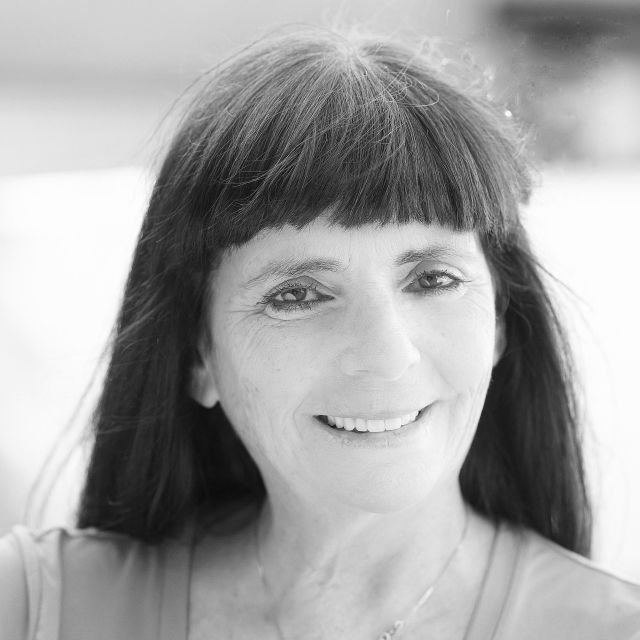
Yvonne Fein is the daughter of Holocaust survivors, an experience that drove her to write about the fallout creatively, to investigate it academically and seek answers from religion unsuccessfully. Former lecturer at the Jewish Museum of Australia, she holds a Diploma of Creative Writing and completed an M.A. in Classical Jewish Text. Her previous publications include two adult novels —April Fool and The Torn Messiah — and one YA novel — Rachel Racing Time.
In 2001, April Fool was short-listed for the Ned Kelly Awards in the ‘Best First Crime Novel’ category. In 2014, she won an award in the Gotham Screenplay Competition (New York) for screen adaptation of April Fool and was a semi-finalist in the Rhode Island Film Festival. Her theatre work includes one-act plays read by the Melbourne Theatre Company and a full-length drama, On Edge, which had a season at the Universal Theatre in Melbourne. Her play, Smash the Glass: A Celebration of Women, performed to a sell-out audience in Melbourne, and was invited to the Magdalena Festival in Brisbane. She has edited Generation and The Melbourne Chronicle — both literary journals — and award-winning Holocaust memoirs by survivors, most notably, The World of My Past (Abraham Biderman, Random House).
Her essays, articles, reviews and short stories (six of which appear in this collection) have been published in Australia, the US and the UK in over 15 journals, newspapers and anthologies. ‘Weintraub’s Disorder’ and ‘Taunting the Abyss’ were nominated for the Pushcart Prize in 2017.
She has been a writer-in-residence at a number of Melbourne schools and lectures extensively on literature and writing. Most recently she conducted creative writing workshops for people suffering mental illness and, as part of an advocacy group for people with disability, she has, improbably, performed stand-up comedy to bring their case to the public’s attention.
Yvonne Fein
An enthralling, entertaining and compelling collection of short stories that follow the great Yiddish storytelling traditions in tone and style: tackling life's questions, big and banal, with an evocative, humorous and thought-provoking authority. In each one, Fein excels in drawing the reader into another reality, to experience, to become part of the story and the characters' lives as they unfold.
"Oh Lord, I know we are the Chosen People but just for once couldn't you choose somebody else?" is an old plea, heartsick yet ironic, and with it these stories lift off on their journey around the world. From Melbourne to the Gold Coast, from Montreux to Jerusalem the tales examine the question of whether it is better to be chosen or ignored by a capricious creator.
The stories are discrete but connected by their representations of various generations of the tormented. A mediaeval legend taken from the Talmud is gentle with gender ambiguity yet follows it to its unforeseen end. A tale of magical realism tells of a rabbi, a student who falls in love with him and a shadow-soul from a distant era. The three of them dance together in the present but the shadow-soul takes the rabbi back to a time of corruption and evil.
There are depressive lawyers and drunken students and there is a dreamer who finds herself inside the world of the hard-boiled detective. Finally, there is a taste of F. Scott Fitzgerald in the saga of girls living together at an exclusive Swiss school.
Both darkness and humour are brought into play to chronicle the disturbances – large and small – bedevilling the protagonists' lives. Almost all of them are engaged in problematic attempts to flee reality. Many suffer from the legacy of history's nightmares yet somehow, with mordant wit and melancholic acuity so characteristic of their tribe, many of them find a way to make their journey worthwhile.